
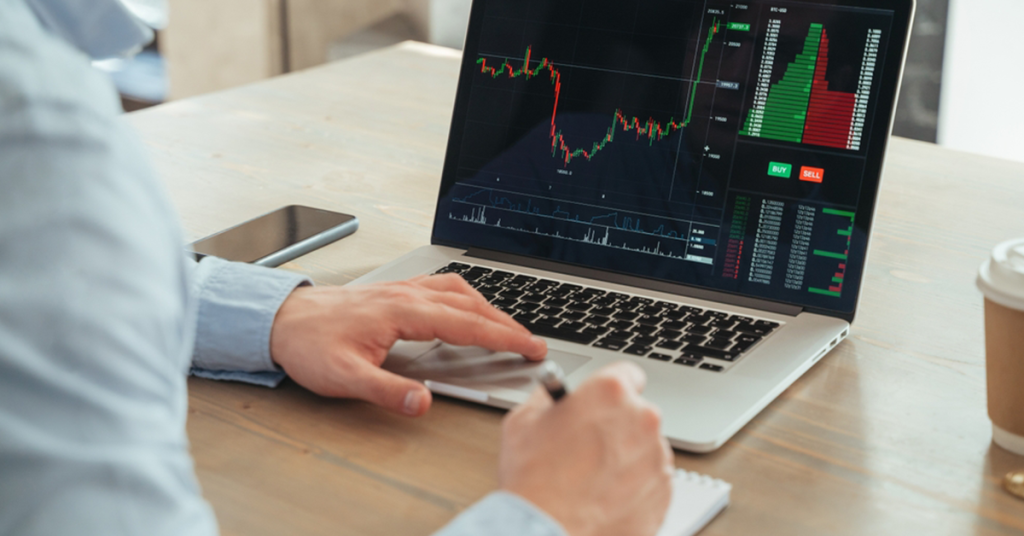
Modern trading platforms have reached a level of automation that would seem like science fiction to market veterans from a few decades ago. With a single tap on your smartphone, algorithms route your orders to global liquidity hubs in milliseconds, processing complex data instantly. However, relying blindly on beautiful, automated interfaces to manage your trading overhead is a quiet recipe for capital depletion.
If modern software automates everything, why should I still calculate the spread manually?
It is easy to assume that because your platform calculates your profits and losses in real-time, you don’t need to know the basic math behind it. This is a very common trap for beginners.
Think of your trading terminal like a car’s dashboard. The speedometer tells you how fast you’re traveling, but it won’t tell you if your engine is burning oil. Your software displays the final dollar value of your trade, but it doesn’t automatically warn you if you’re entering during a high-spread event that makes your trade mathematically unviable. Understanding how to calculate spread in forex gives you the analytical depth to verify that your broker’s software is giving you a fair deal, rather than overcharging you on every entry.
What is the simple, raw math formula to calculate the spread?
Let’s strip away the technical jargon and keep this straightforward. Every time you open your terminal, your platform displays two prices for any currency pair: the Bid and the Ask.
The Bid is the highest price a buyer is offering, while the Ask is the lowest price a seller is demanding. The spread is simply the mathematical difference between these two values. To calculate the spread in pips, you subtract the Bid from the Ask. For example, if the EUR/USD is quoted with a Bid of 1.10502 and an Ask of 1.10515, you apply this simple calculation:
$$\text{Spread} = \text{Ask} – \text{Bid}$$
$$\text{Spread} = 1.10515 – 1.10502 = 0.00013$$
Since the fifth decimal place represents points (pipettes), this difference of $0.00013$ translates to a tight spread of 1.3 pips, or 13 points.
How do leverage and position sizes turn these decimal points into real cash?
Leverage functions like a financial borrowing arrangement with your broker. It allows you to control a large market position using only a small cash margin deposit as collateral.
While it is a highly effective tool for maximizing your capital efficiency, it acts as a double-edged sword. It multiplies your risks with the exact same speed as your potential gains. When you use high leverage to trade larger lot sizes, the physical dollar cost of the spread scales up with your position size. A small spread is practically unnoticeable on a micro lot, but on multiple standard lots, that starting transaction toll can represent a massive cash expense the millisecond you enter. If you don’t calculate these transaction costs relative to your leverage beforehand, the initial deficit can quickly consume your margin buffer.
How does automatic stop-loss execution interact with the spread?
This is where lack of manual calculation knowledge can physically destroy a trading account. Most retail charts only plot the Bid price on the screen by default.
If you are in a short position, your trade can only be closed by buying back at the Ask price, which is floating slightly higher than the line you see on your chart. During high-impact news releases or the daily midnight rollover window, liquidity providers temporarily pull their orders, causing the spread to widen dramatically. The Ask price can spike upward and trigger your stop-loss even if the visible candle chart on your screen never physically touched your level. Without knowing how to track and calculate these dynamic price gaps, you’ll find yourself stopped out of perfectly good trades by “phantom” price movements.
How do I configure my terminal settings to track spreads in real-time?
To trade successfully on advanced platforms like MetaTrader 5 (MT5), you need to customize your visual interface to show the raw market data clearly.
First, open your chart properties and make sure you check the box to display the “Ask line” alongside the default “Bid line” so you can visually see the active spread gap breathing on your screen. Next, right-click inside your Market Watch panel and select the “Spread” column to display the active pip gap for every pair in real-time. To ensure you are receiving the most competitive pricing, choose to execute your strategies through highly rated, low spread forex brokers that offer deep institutional liquidity. This configuration gives you complete transparency and helps you avoid executing trades when the spread is artificially inflated.
What practical rules should I follow to beat the spread daily?
The smartest strategy is to align your execution hours with peak global market liquidity. Avoid trading during quiet regional holidays, major high-impact economic data releases, or the daily midnight rollover window around 5:00 PM EST when global banks temporarily pause pricing.
Focus your active sessions around the London and New York crossover, when trading volume is at its absolute peak and competition keeps spreads compressed. By exercising patience, monitoring real-time spread levels on your customized dashboard, and executing your positions only when the order books are deep, you protect your hard-earned capital from unnecessary transactional drag.
Summary
The spread is the primary transaction fee of the trading world, representing the real-time gap between the buy and sell prices on your terminal. Even though modern software automates execution, understanding the manual math behind this price gap is critical to protecting your stop-losses, managing your leverage risks, and verifying your actual transaction costs. You can keep your trading overhead minimal by executing your setups during peak market hours when liquidity is deepest, utilizing limit orders for non-urgent entries, and partnering with a regulated, low-spread broker. Managing these baseline execution costs with professional-grade discipline is how you protect your capital and build a sustainable trading business over the long run.
