
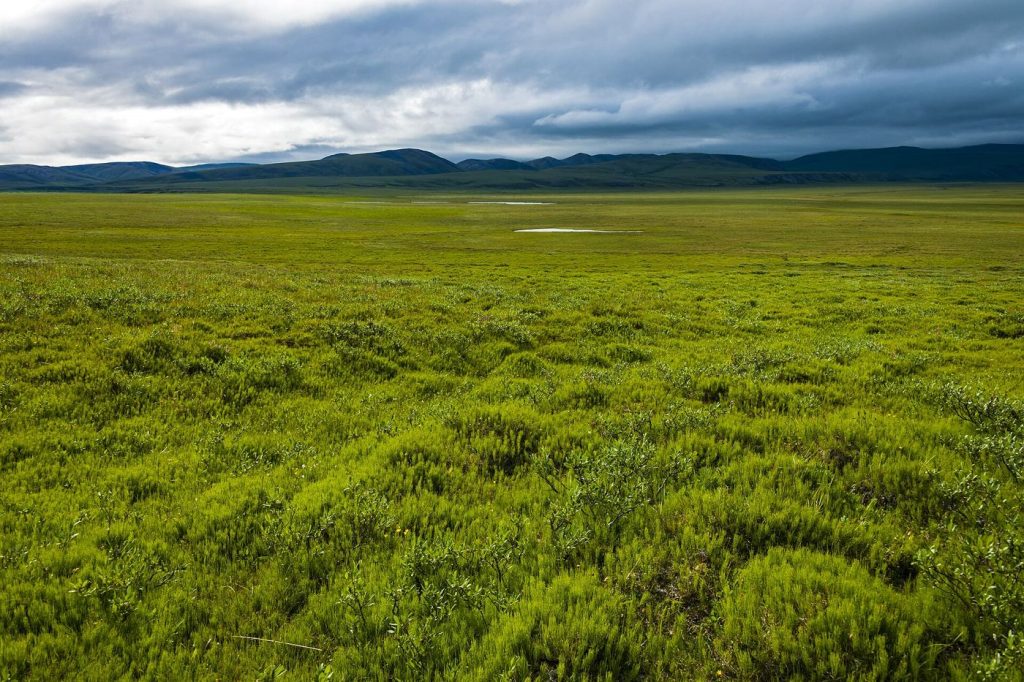
Beneath the frozen soils of the far north lies a vast store of dead plants and animals, locked in ice for thousands of years. This permafrost covers about a quarter of the land in the Northern Hemisphere, and it holds roughly twice as much carbon as the entire atmosphere. As the Arctic warms, the ice is melting, and the ancient organic matter is waking up. Microbes begin to break it down, releasing carbon dioxide and methane into the air, which warms the planet further and melts more permafrost. The thaw is already changing the land: roads buckle, buildings sink, and whole hillsides slump into the sea as the ice that held them together disappears. Villages in Alaska, Siberia and northern Canada are moving homes and schools as the ground beneath them softens.
What the Evidence Shows
Scientists are racing to measure how fast the carbon is escaping. Some of it has been frozen since the last ice age, and nobody knows how much will be released or how quickly, because much of the thaw happens in remote places that are hard to study. Researchers drill cores, fly sensors over the tundra and track the gases rising from thawing lakes, where bubbles of methane break the surface in winter. The feedback is one of the most worrying in climate science, because it is driven by warming itself and cannot easily be switched off. Even if human emissions stopped tomorrow, the permafrost already thawing would keep releasing carbon for decades. Scientists say the best defence is to limit warming now, before more of the frozen ground is lost. Reporting and analysis from sources such as National Science Foundation track the same developments, and specialists following the thawing permafrost say the direction is now consistent across independent lines of evidence.
The Wider Context
The wider context is a research landscape in which replication and open data now decide reputations. Findings connected to the thawing permafrost are being checked by independent groups with shared datasets, and the teams involved publish their methods in full so rivals can test every step. That discipline is slower than a headline cycle, but it is why results in this area increasingly survive first contact with scrutiny.
What Happens Next
What happens next in the story of the thawing permafrost will be decided by follow-up work already under way: larger samples, longer observation and instruments that have not yet come online. The researchers involved are unusually united on one point, that the current results justify the next investment of time and money. Readers will not have to wait long for the first tests of that claim. You can follow related developments in our coverage of science.
There is a practical lesson in all of this for readers deciding what to do today. Start with the verified facts, be wary of anyone promising certainty, and prefer reversible steps while the evidence is still developing. Circumstances differ by country, income and personal situation, so general guidance should always be weighed against your own context before you act on it in any significant or lasting way.
